


This month’s Ask the PPC question about AI ad placements is near and dear to my heart. We’ve seen ads begin showing up on AI surfaces since 2024, and yet, they still have an air of mystery about them:
“Ads are starting to show up in AI chat experiences. How should advertisers think about these new placements – and are they worth the budget?”
As I work for Microsoft, I can’t weigh in on competitor brand value for money. What I can do is speak about AI ads in general terms:
- How to access AI ad inventory.
- How to think about metrics for AI placements.
- Building in budget (time and money) for AI placements.
How To Access AI Ad Inventory
There are effectively two ways to purchase AI ad inventory: directly through an AI-first platform, or as part of your broader paid media buys on major ad networks. Neither is inherently better or worse than the other, but they do require different strategies.
If you’re buying directly, then you know the media buy is 100% allocated to that AI surface, which makes it easier to design creative and measurement with that specific experience in mind. These buys are often available as cost-per-mille (CPM) or cost-per-click (CPC), depending on the platform and market.
Conversely, when you access AI surfaces through existing campaign types on broader ad platforms (for example, Performance Max/AI-assisted campaign types, Shopping, and Search), your creative may be adapted to fit the AI experience and the user’s intent in the moment.
This is why it’s critical to remember that AI is a fluid and dynamic placement. Rigid creative asks (including pinning), make it hard for AI creative to fully meet the needs of the human engaging with the AI.
If your brand has constraints (specific language that must be used, terms that can’t be included, etc.), most ad platforms are testing ways for humans to add constraints to how creative adapts to AI surfaces. That said, if your brand truly must lock in exact creative that must always serve, you may not be able to take advantage of AI surfaces to the same degree as less restrictive brands.
It’s worth calling out that AI-assisted campaign types (like AI Max and Performance Max) often have the best chance to show on AI surfaces due to their creative flexibility, broader matching, and dynamic audience mapping. That said, standard Search and Shopping formats can also be eligible depending on the experience, market, and query intent. Some platforms may also include rich creative formats (such as multimedia-style units) when they meet relevancy and policy requirements.
Before we move onto how to understand the metrics, it’s worth remembering that AI surfaces are more than just AI assistants like ChatGPT and Copilot. AI modules also have a place on the search engine results page (AI Overviews, Answer Card Formats on Bing, etc.).
When AI suggests something, it’s important that the human doesn’t feel the recommendation is driven purely by sponsorship. That’s why many experiences clearly separate citations and other non-ad modules from paid placements, and why ad eligibility is typically held to a high relevancy bar. Additionally, structured commerce information (for example: accurate pricing, availability, shipping, returns, and customer service details) helps AI systems surface more reliable options and provides trust signals that reassure users they’re engaging with a legitimate vendor.
How To Think About AI Placement Metrics
Many make the mistake of thinking of AI as purely discovery or purely “bottom of funnel” performance. In practice, AI can compress consideration cycles dramatically; sometimes taking a user from discovery to conversion in under 30 minutes. In internal Copilot analyses, these placements have shown up to 25% greater relevancy versus comparable SERP placements for similar intents.
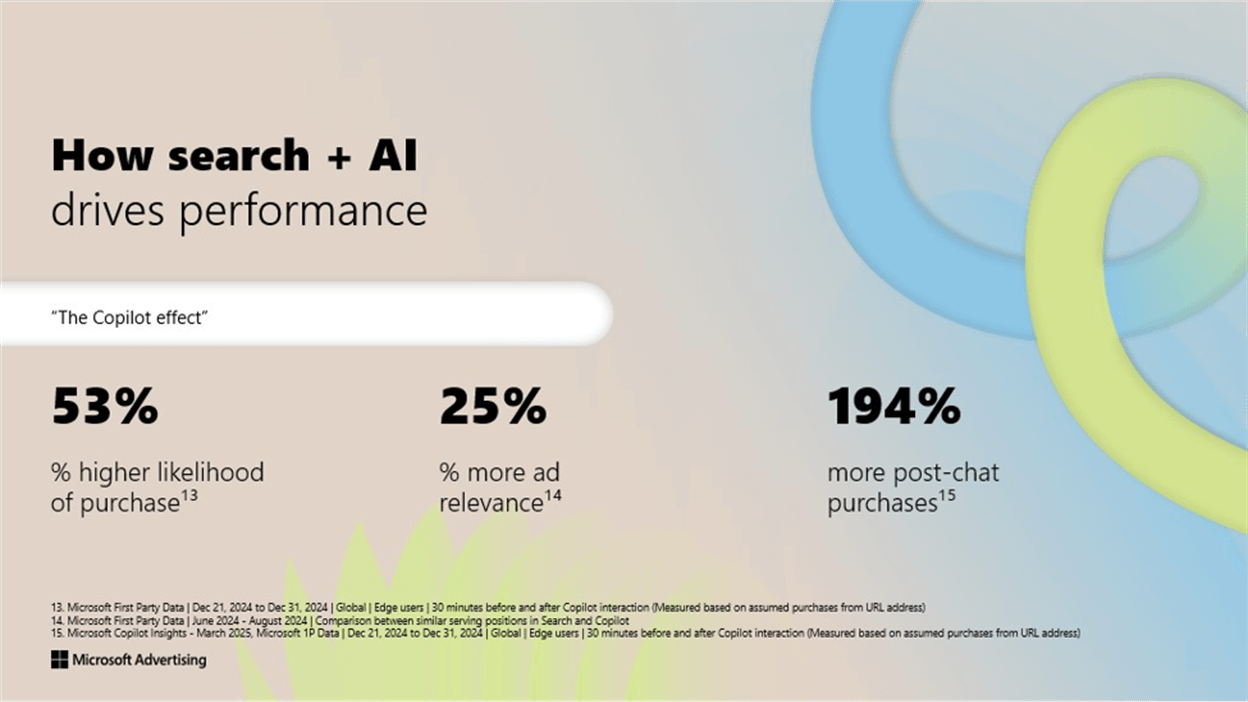
At the same time, AI placements bring an even stricter ad relevancy bar than conventional SERPs. This can lead to questions on volume as well as whether AI placements represent a meaningful stand-alone investment opportunity.
AI placements are merging the line between brand and performance media buys. This is why it’s critical to build in awareness for these metrics and why conventional return on ad spend (ROAS)/cost-per-action (CPA) goals might not be as useful for AI surfaces.
Some AI experiences let advertisers build audiences based on engagement signals from those placements. Others are structured more like awareness buys (for example, CPM-based inventory), where the primary goal may be exposure and consideration rather than an immediate on-platform transaction. If you judge those placements only on last-click conversions, they’ll often look weaker than they really are.
Leaning into data driven attribution (which has been the standard on Google for a while), allows you to get a fuller picture of how different engagements empowered the user to say yes to you.
Yet this remains a “performance marketer” mindset. To fully capitalize on AI placements, you also need to build in brand sentiment, citation share, and other awareness metrics.
This is why it’s critical to leverage AI visibility and on-site behavior tools to understand how often AI systems are turning to you for answers, and what users do after they land. Session replay and UX analytics tools (for example, Microsoft Clarity, Hotjar, FullStory, etc.) can help you spot friction, intent mismatch, and content gaps that matter across AI-driven and traditional traffic sources.
When reporting is limited or aggregated, focus on directional measurement: compare conversion quality (not just quantity), watch assisted conversion paths in data-driven attribution, and run structured tests (geo splits, time-based holdouts, or budget-in/budget-out experiments) to estimate incremental lift. Pair that with brand-aware signals like direct traffic, branded search demand, and “share of citation” in AI answers to avoid under-valuing upper- and mid-funnel impact.
Building Budget For AI Placements
Going back to the original question at the heart of this post: Are AI placements worth it?
If you believe a 194% better conversion rate (based on Microsoft internal data) is worth the creative flexibility AI placements often require, then it’s worth planning how to build budget and operational time around them. If you know you can’t say yes to that flexibility, the value prop won’t matter, because rigid compliance requirements will limit where and how creative can adapt. This is why most major ad platforms continue to offer options that honor strict creative and policy constraints.
As was shared earlier, major ad platforms can provide access to AI surfaces through existing campaign types. In many accounts, pricing has appeared directionally similar to comparable non-AI inventory once you normalize for intent and competition, though actual cost will vary by market, query class, and available supply.
AI-first ad platforms can price inventory differently, often reflecting more limited supply and stricter user-experience constraints around how many ads can appear. Practically, that means you may need enough daily budget to exit the learning phase and generate signal (clicks, engagement, conversions) before you can judge performance. Instead of anchoring on a universal CPC, build a test budget based on your category’s typical costs, your conversion rate, and the minimum volume you need to make a decision.
The other part of budgeting is the time to build/manage creative, targeting, and outcomes. AI creative includes options to let people know more information about your product/service prior to clicking through to your site/allowing the agent to complete the transaction through the AI.
Final Takeaways
Here are the most important things to remember about AI ads:
- They won’t always serve, and if they do serve, it’s because the platform believes with a high degree of confidence that your ad will be a net benefit to the human engaging with the AI.
- Privacy considerations mean split out metrics for AI surfaces are more complicated than conventional reporting.
- Different AI surfaces apply different inventory valuation on the placements. The budget that works for one, might be over/under for another.
AI placements have been a part of the marketing mix for years; they just have more visibility now. Whether you access them through existing campaign types or lean into AI-first buys, the core question isn’t simply whether “they’re worth it.” In many cases, the data supports testing them, especially when you evaluate beyond last-click and account for incrementality.
The bigger question is whether your brand can say yes to the creative flexibility the AI era demands. Creative locked into rigid formats, or forced into a single, static landing experience, tends to perform less effectively on AI surfaces than creative that can adapt from intent, to message, to solution as the user’s needs evolve.
More Resources:
Featured Image: Paulo Bobita/Search Engine Journal