


The pattern is consistent. Build for assistive technology, build for AI agents. The audit is the same shape, run for two visitor classes simultaneously. The vocabulary is different. The artifact is identical.
Run One Accessibility Audit, Recover Both Visitor Classes
Stop running accessibility audits and AI-agent-readability audits as separate disciplines on separate quarterly cycles. They are the same audit. Web professionals who already invested in WCAG conformance are most of the way to passing Google’s seven. Operators who never did the accessibility work now have the agent-readability work landing on the same checklist with vendor weight behind it.
Concrete move for this week:
- Pull the top five highest-traffic pages on your website.
- Run them through both Google’s seven rules and a WCAG-AA scan (Lighthouse, axe DevTools, the WAVE extension; whichever you already use). Note the overlap.
- Fix once. Recover both visitor classes.
If you are on Tailwind v4, add the three-line @layer base snippet to your global stylesheet first. That single change recovers rule 5 across your entire population. It is the single biggest fix on the list because Tailwind v4 ships everywhere now, the accessibility tooling won’t flag it (the click still works), and nobody is talking about this regression.
Search Interest In “Web Accessibility” Barely Moved When The EAA Took Effect, Then Quadrupled
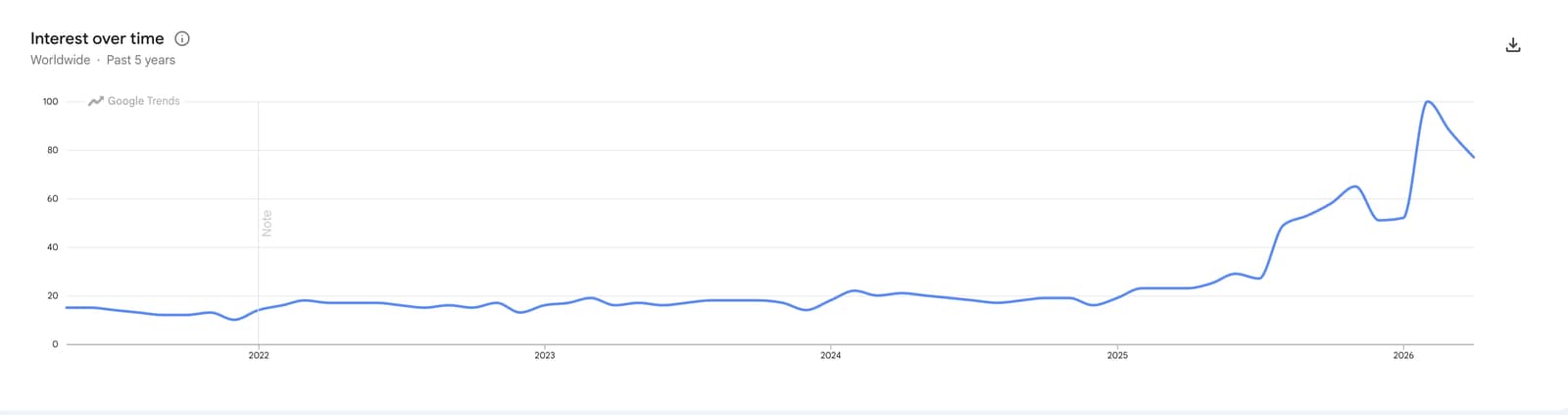
Search interest was flat for four years. Through 2024. Through most of 2025. Through the European Accessibility Act becoming applicable on 28 June 2025, which is the regulatory event that should have moved this curve more than anything else, and barely did. The bigger climb starts late 2025, accelerates through early 2026 to its peak, and has settled lower since. Worldwide search interest in the term more than quadrupled in 18 months.
I am not claiming the AI-agent coverage is what drove this. The data is correlational. But the shape is interesting: the regulatory event that should have spiked the curve barely did, and the curve started moving when the audience for accessibility-shaped guidance started overlapping with the audience for AI-agent-readability guidance. See also: AI agent standards: what do we need to know?.
The Convergence Is A Decade Old; Google’s Vendor Weight Is What’s New
The last decade of accessibility work was carried by a community that mostly didn’t have the weight to make it the dominant audit discipline. The work was the right work. The audience didn’t show up. Then AI agents arrived with budget, traction, and a vendor-side incentive structure pointing in the same direction. When Google publishes the same checklist as agent-readability guidance, the discipline stops being two audits run by two separate communities. It becomes one input-side discipline that web professionals run because the visitor class spans both.
Six of seven on the audit is a passing grade. The seventh is a CSS rule that was Tailwind’s job to set, and now it’s yours.
Trust … no one? At least, not blindly.
More Resources:
This post was originally published on No Hacks.
Featured Image: beast01/Shutterstock